Wobbly Life
- 4.5
- Rating
- 10.00K
- Installs
- $9.99
- Price

 Analysis by App-foxy
I went into Wobbly Life expecting a lighthearted adventure and quickly found that its real appeal is less about following a strict path and more about seeing what happens when I push a silly physics-based world in the wrong direction. Developed by Curve Games, this open-world multiplayer game turns ordinary movement into a source of comedy. A jump can become a tumble, a simple task can turn into a chase, and a short visit with friends can stretch into a much longer session because there is always one more thing to try.
That makes it an unusual fit in the adventure category. It is not built around the same kind of pressure as a serious action game, nor does it behave like a tightly scripted story adventure. Instead, I get a playful space where action creates an immediate reaction, the reaction often produces a reward or a new problem, and eventually I reset my plans and start another small adventure. The fun comes from the chain of consequences, not from perfect execution.
What the first few minutes reveal
The first action in Wobbly Life is deceptively important: I move, interact, and test how the character responds to the world. The loose physics make even basic control feel expressive. My character does not move with the rigid precision I would expect from a competitive platformer, and that is clearly intentional. The wobble changes how I approach obstacles because I am not simply calculating a jump and repeating it. I am also managing momentum, position, and the possibility that the landing will become its own event.
You May Also Like

 AccuWeather: Weather Radar
AccuWeather Review: A Quick, Clear Forecast for Everyday Decisions
For everyday plans, the best forecast is the one you can understand quickly. AccuWeather makes rain timing, radar, and local conditions easy to act on, with a few trade-offs.

 Hill Climb Racing
Why Hill Climb Racing Still Turns Crashes Into One More Run
A tiny car, a bumpy hill and one more upgrade: Hill Climb Racing keeps resurfacing because its simple chaos makes every near-miss feel personal.

 AliExpress - Shopping App
AliExpress Makes Global Shopping Feel Personal, but Shoppers Bear the Risk
AliExpress turns a global marketplace into a pocket-sized discovery engine. Its reach is useful, its shopping loop compelling, and its trade-offs easy to miss.

 Lords Mobile: Kingdom Wars
Lords Mobile Is a Kingdom-Building Routine, Not a Quick Match
A case-by-case verdict on the building, battles, device demands, and social commitments that make Lords Mobile rewarding for some players and exhausting for others.

 PDF Scanner app - TapScanner
TapScanner Makes Paperwork Easier to Capture, Check, and Share
TapScanner makes scanning with a phone feel less like a rescue operation and more like a dependable step in getting work done. Its capture tools are useful, though not flawless.

 Block Blast!
 Shows How Much a Puzzle Game Can Leave Out
A quiet grid game shows why puzzle players increasingly value instant clarity, repeatable skill and low-pressure play—and where the genre still needs to catch up.
More From Our News Desk
View All News


This gives the opening a friendly, low-pressure feeling. I do not need to understand a complicated system before I can participate. I can explore, try a task, make a mistake, and see the result without feeling that the mistake has ruined the experience. For younger players and casual groups, that accessibility is a major strength. The Everyone content rating also reflects the broad, family-friendly tone, although the physics can still create enough unpredictability to keep older players amused.
The open-world design supports curiosity better than a narrow sequence of levels. I can leave one activity unfinished, wander toward something that catches my eye, and return later when I feel like it. This freedom is useful when playing with friends because different players can want different things at the same time. One person may be focused on a job-like activity while another experiments with movement or causes harmless chaos nearby. The game does not need every player to have the same goal for a session to work.
There is a trade-off here. Players who want a clearly directed adventure may find the early experience too loose. The world invites experimentation, but it does not always provide the same strong sense of urgency that a mission-driven game offers. I enjoyed that openness, yet I would not recommend it as the first choice for someone who wants a dramatic campaign with carefully staged encounters and constant narrative momentum.
Why the physics matter more than the setting
The physics are not just a visual joke layered over a conventional adventure. They change the way I make decisions. When I approach an object, vehicle, platform, or task, I think about what might happen if the character hits it awkwardly. That uncertainty creates a feedback rhythm: I act, the world responds immediately, I adjust, and then I decide whether to continue with the plan or turn the accident into a new objective.
This rhythm makes small actions feel worthwhile. In a more traditional open-world game, walking across a space can feel like downtime between meaningful events. Here, movement itself can be entertaining. A failed attempt may be funnier than a successful one, especially in multiplayer, where friends can react to the same unexpected collision or tumble. The game earns its humor through physical response rather than through constant jokes or long dialogue.
I found it helpful to treat the controls as something to learn through repetition rather than something to master immediately. If I tried to force every action into a precise sequence, the looseness could feel frustrating. When I accepted that a little instability was part of the design, I started using it more creatively. A messy approach can sometimes be faster than a careful one, and a failed landing may reveal a route or interaction I would not have considered.
That is one of the less obvious strengths of the game: it rewards a change in attitude. The best player is not always the one who performs the cleanest action. Often, the better player is the one who notices that the unexpected result has created a new opportunity. This is particularly valuable in a group, where one person’s mistake can become everyone’s next activity.
How a normal session develops
A typical session begins with a modest intention. I might plan to explore, complete an activity, or simply meet up with another player. The first few minutes usually stay close to that plan, but the physics and open world make detours easy. An interaction produces a funny result, a nearby area looks worth checking, or another player creates a distraction. The original goal remains available, but it no longer feels mandatory.
The action-feedback loop is strongest when I give myself a small target instead of trying to “finish” the whole world. For example, I can decide to reach a particular place, test a new activity, or help a friend with a task. That gives the session shape without removing the freedom that makes the game distinctive. Once the target is reached, I can choose another one or stop while the experience still feels fresh.
This approach also helps with the game’s occasional lack of direction. Rather than waiting for the world to tell me exactly what matters, I create a temporary purpose. It is a simple habit, but it makes the open-world structure feel more manageable. I am not wandering aimlessly; I am choosing a small experiment and seeing how the world reacts.
Multiplayer changes the rhythm substantially. With friends, the game becomes less about optimizing progress and more about sharing reactions. A task can be valuable because it gives everyone a reason to move through the same space, but the memorable moment may come from the accident between objectives. I would choose this game for a relaxed group that enjoys improvising, not for players who become annoyed when teammates abandon the plan for a joke.
Rewards, resets, and the reason to return
The reward structure works best when I see progress as a collection of experiences rather than a single finish line. Completing an activity gives the session a sense of accomplishment, but the larger reward is discovering another way to interact with the world. The game encourages me to return because I remember an unfinished idea: a place I did not fully explore, a task I wanted to retry, or a funny situation I want to recreate with someone else.
This is where Wobbly Life differs from many conventional adventure games. A typical alternative may lead me through missions designed to build toward a dramatic conclusion. Here, the satisfaction is more immediate and personal. I set a goal, watch the world respond, and decide whether the outcome was good enough to keep or funny enough to repeat. The reward is not always a powerful new ability or a major story revelation. Sometimes it is simply gaining confidence with the physics and finding a smoother way to handle an activity.
That can be liberating, but it also explains why the game may not hold every player for long sessions. If I need constant progression, a strong plot, or a clearly escalating challenge, the loose reward rhythm may feel thin. The game is better at producing memorable moments than at delivering a carefully measured sense of advancement. I consider that a deliberate trade-off rather than a flaw, but it is still an important choice for buyers.
The current version is 1.1.0.7, and the game requires an operating system version of 11 or later. For someone deciding whether to install it, the practical point is simple: check the device’s system compatibility before planning a multiplayer evening. The game is priced at $9.99, so I would approach it as a paid party-friendly adventure rather than a throwaway download. Its value depends heavily on whether the player enjoys open-ended experimentation and has people to share it with.
Useful ways to get more from the world
My first tip is to separate exploration sessions from objective sessions. When I try to complete tasks while also investigating every distraction, I can lose track of what I was doing. A better routine is to spend one short session deliberately exploring, then return with a specific activity in mind. The same world feels less unfocused when I change the purpose of each visit.
My second tip is to use failure as information. If an approach sends the character tumbling or leaves an interaction in an awkward position, I do not immediately repeat the exact same movement. I look at what the physics revealed. Was I carrying too much momentum? Did the angle matter? Did the collision create a more convenient position? This mindset turns the loose controls from a source of irritation into a practical tool.
My third tip is for multiplayer groups: agree on a shared starting point, but do not insist on staying together every second. The game’s social energy is strongest when players can split briefly and then reunite with stories about what happened. Forcing everyone into one rigid route removes some of the spontaneous comedy, while giving the group no meeting point can make the session feel scattered.
A fourth useful habit is to stop after a satisfying outcome instead of continuing until the novelty disappears. Because the game makes it easy to begin another activity, I can keep going past the point where the session feels special. Ending after a successful task, a funny accident, or a completed group challenge gives the next session a clear reason to exist. The reset becomes part of the design rather than a sign that the game has run out of content.
Who should play it, and who should skip it
I would recommend Wobbly Life to families, casual players, and friend groups that enjoy playful chaos more than strict competition. It is especially suitable for people who like games where a mistake can become the highlight of the evening. The Everyone rating makes its tone accessible, while the open-world multiplayer structure gives a group room to create its own pace.
I would be more cautious about recommending it to solo players who need a powerful story to carry the experience. Playing alone can still make exploration and experimentation enjoyable, but the physics-driven humor naturally gains energy when another person is watching, helping, or accidentally making the situation worse. If your ideal adventure is a polished sequence of dramatic missions, a more traditional story-focused game will probably serve you better.
It is also not the best match for players who dislike imprecise movement. The wobble is the identity of the game, not an optional effect that can be ignored. Some people will find the lack of exact control charming; others will see it as unnecessary friction. I recommend trying to imagine how you react to a failed jump that is funny rather than technically satisfying. If that sounds enjoyable, the physics are likely to work for you. If it sounds exhausting, the game may become irritating quickly.
The multiplayer angle deserves one more qualification. This is a good choice for a group that wants shared freedom, but not necessarily for a group seeking a structured cooperative campaign. Players who prefer clear roles, carefully balanced encounters, or competitive scoring may find the open-ended design too casual. Its strongest social moments come from improvisation, not from proving who played best.
How it compares with familiar adventure choices
Compared with a conventional open-world adventure, this game places less emphasis on dramatic progression and more on physical comedy. The environment is valuable because it gives me room to experiment, not because every location delivers a carefully authored set piece. Compared with a platformer, it is less about precise timing and more about adapting when movement goes slightly wrong. Compared with a party game, it offers a broader space to explore, but it may not provide the same immediate round-based structure.
That middle ground is its clearest identity. It can serve as a relaxed adventure when I want to wander, a social game when friends join, and a physics playground when I want to test what the character and world will do. The compromise is that it does not fully replace a focused title in any one of those areas. It is not as narratively directed as a story adventure, as precise as a platformer, or as instantly organized as a short party game.
For an everyday scenario, imagine a weekend afternoon when two friends have limited energy but still want to play something together. A demanding competitive game may create tension, while a long role-playing game may require too much commitment. Wobbly Life fits that gap well. One person can suggest a small goal, everyone can start moving, and the session can naturally change direction when the physics produce something entertaining. If the group only has a short time, a single activity can provide a complete mini-session; if everyone is engaged, the open world gives them a reason to continue.
My final take on the action-feedback loop
After spending time with it, I see Wobbly Life as a game built around a simple but effective sequence: I try something, the physics answer in an unpredictable way, I receive either progress or a memorable failure, and then I reset my plan with a new idea. That loop is more important than any individual activity because it explains why another session begins. I return not only to complete something, but to see what happens when I approach it differently.
The game has a 4.5 average from around 2.9 thousand ratings, with over 10 thousand installs, and that broad response makes sense to me. Its appeal is easy to understand once the movement clicks. Curve Games has made an adventure that does not demand perfection from the player; it asks for curiosity and a willingness to laugh at the result.
My recommendation is positive, with a clear condition: choose it if you want a friendly, physics-driven open world where shared accidents are part of the reward. At $9.99, I would buy it for relaxed multiplayer sessions or for a player who enjoys creating personal goals. I would skip it in favor of a more directed alternative if I wanted a serious story, exact controls, or a tightly managed progression system.
For me, the best reason to keep playing is the reset. I can finish one small plan, walk away from a messy outcome, and come back with a different idea instead of feeling that I have exhausted a fixed sequence. That makes Wobbly Life an easy game to recommend to the right kind of player: someone who sees a failed action not as wasted time, but as the beginning of the next adventure.
FAQs for Wobbly Life
01What is Wobbly Life, and what can you do in the game?
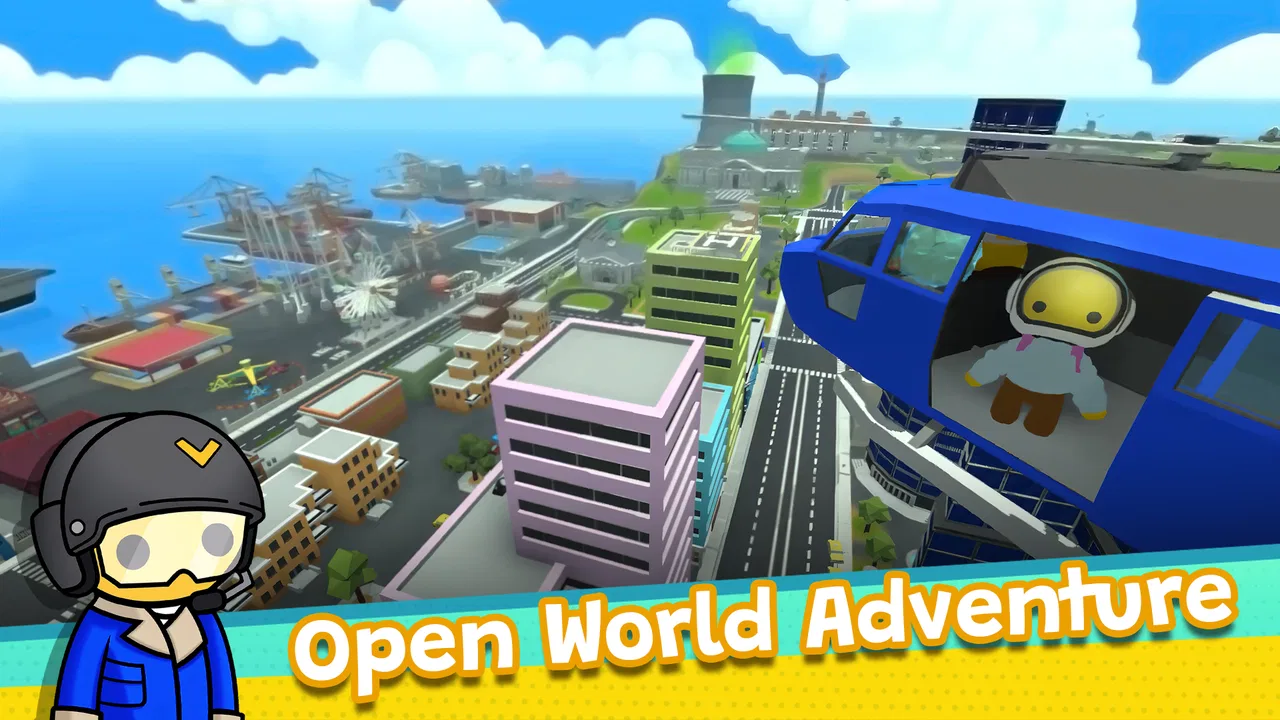
Wobbly Life is an open-world sandbox adventure game focused on exploration, mini-games, jobs, vehicles, and playful physics-based interactions. You play as a customizable Wobbly character and can earn money by completing different activities, then spend it on clothing, homes, vehicles, and other items. The game is designed to encourage experimentation rather than following only one fixed storyline.
02Is Wobbly Life available on Android and iOS devices?
Before downloading, check the official store listing for your specific device because Wobbly Life availability can vary by platform, region, and version. The game is best known on PC and consoles, while mobile users should be careful with unofficial APK files or imitation apps. Only install a version published through a legitimate store or an officially supported distribution channel.
03Can Wobbly Life be played with friends or in multiplayer mode?
Yes, multiplayer is one of the most enjoyable parts of Wobbly Life when supported by the version you are using. Players can cooperate while completing jobs, driving around the island, discovering secrets, and causing harmless chaos together. Multiplayer requirements and supported player counts may differ between platforms, so review the store description and in-game options before purchasing or downloading.
04Is Wobbly Life suitable for children?
Wobbly Life uses colorful cartoon visuals, silly characters, and non-realistic slapstick humor, making it generally approachable for younger players. However, parents should still review the platform rating, online multiplayer features, chat or communication options, and any in-app purchase information. Because the game rewards free exploration, younger children may also benefit from guidance when learning its controls and objectives.
05Does Wobbly Life require an internet connection or include purchases?
The internet requirements depend on the platform and whether you want to use multiplayer or download updates. Some gameplay may be available offline after installation, but online features normally require a stable connection. You should also check the official listing for the exact pricing model, downloadable content, and possible in-app purchases, since these details can change between versions and storefronts.
Pros
- Fun physics-based gameplay with plenty of silly moments
- Large open world encourages exploration and experimentation
- Many jobs and activities provide variety beyond simple missions
- Local split-screen multiplayer makes it enjoyable with friends
- Frequent customization options for characters
- vehicles
- and homes
Cons
- Physics can feel unpredictable and frustrating during precise tasks
- Some objectives become repetitive after extended play sessions
- Performance may vary on older or less powerful mobile devices
- The open world can feel confusing without clearer navigation tools
- Progress may feel slower when playing without multiplayer support

Wobbly Life
Gallery